
Ortto Marketing Automation is not just a messaging tool. At its core, it is powered by Ortto CDP, which unifies customer data across channels, products, and touchpoints. This customer data foundation allows businesses to move beyond list-based marketing and into behavior-driven automation that adapts in real time.
However, the success of Ortto depends heavily on proper Ortto Implementation. Without correct data modeling, event tracking, and lifecycle mapping, even the most advanced automation features fail to deliver results. That is why businesses in 2026 increasingly focus not only on choosing Ortto, but also on implementing it correctly as a long-term growth system rather than a campaign tool.
Why Ortto Marketing Automation Matters in 2026
Customer expectations have changed. Buyers now expect personalized, relevant experiences across email, in-app messaging, SMS, and push notifications. At the same time, privacy regulations and the decline of third-party cookies have pushed businesses to rely on first-party data instead of external tracking tools.
Ortto Marketing Automation addresses these challenges by focusing on unified customer data and behavior-based automation. Instead of treating email marketing, analytics, and segmentation as separate tools, Ortto connects everything into a single platform. This allows teams to react to real customer actions rather than assumptions.

In 2026, successful marketing is not about volume. It is about timing, relevance, and understanding intent. Ortto enables businesses to build automation systems that feel human, responsive, and measurable, which is why it has become a preferred choice for SaaS companies, ecommerce brands, and B2B service providers.
What is Ortto Marketing Automation?
Ortto Marketing Automation is built on three tightly connected layers: automation, data, and execution. At the foundation sits Ortto CDP, which acts as the single source of truth for all customer information. Ortto CDP collects behavioral events, attributes, engagement data, and lifecycle signals into unified customer profiles that update in real time.
Unlike traditional marketing tools that rely on static contact lists, Ortto CDP enables businesses to understand intent, timing, and engagement depth. Every action, such as a page visit, product interaction, email click, or purchase, becomes usable data for segmentation and automation.
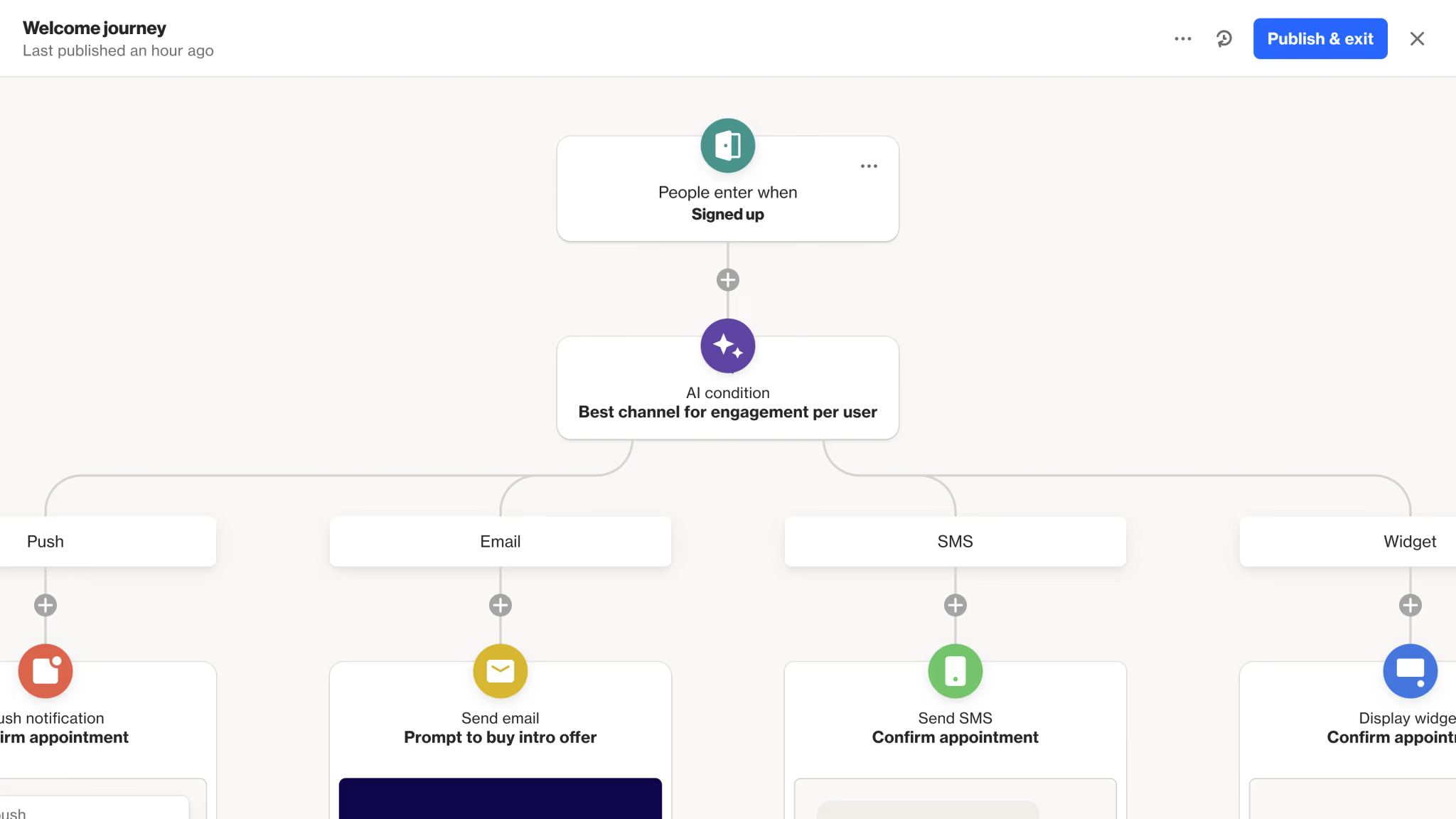
On top of this data layer sits Ortto’s automation engine. Journeys are triggered by real customer behavior rather than fixed schedules. This allows businesses to deliver relevant messages at the exact moment a user is most likely to convert, retain, or expand.
Proper Ortto implementation connects these layers together. Implementation includes customer data modeling, event tracking setup, integration with CRMs and product tools, lifecycle stage definition, and journey architecture. A strong Ortto implementation ensures that automation logic reflects real business goals instead of assumptions.
In 2026, Ortto is most effective when implemented as a customer engagement infrastructure rather than an email marketing platform.
How Ortto Has Evolved
Ortto has evolved significantly over the years, especially after its transition from Autopilot. The platform now focuses heavily on customer data unification, advanced segmentation, and privacy-first marketing.
In 2026, Ortto places more emphasis on event-based tracking and lifecycle stages. Businesses can track product usage, engagement levels, and conversion signals without relying on third-party cookies. This shift allows companies to build reliable automation strategies that remain effective even as privacy regulations tighten.
Ortto’s evolution reflects the broader trend toward data ownership and long-term customer relationships, making it a future-ready automation platform.
Core Features of Ortto Marketing Automation
Ortto’s strength lies in how its features work together to create a complete automation ecosystem.
The customer data platform is the foundation. It collects and unifies customer data from multiple sources into a single profile. This includes demographic data, behavioral events, lifecycle stages, and engagement history. With a unified profile, teams gain a clear view of each customer’s journey.
The visual journey builder allows marketers to design automation workflows using a drag-and-drop interface. Journeys can branch based on behavior, timing, and attributes. This makes it possible to create personalized paths for different user segments without writing code.
Segmentation in Ortto is dynamic and flexible. Businesses can create audiences based on real-time behavior, engagement levels, and lifecycle stages. These segments update automatically as customer data changes, ensuring messages remain relevant.
Ortto supports multiple messaging channels, including email, SMS, in-app messages, and push notifications. All channels are managed from one platform, making omnichannel communication easier to plan and measure.
Analytics and reporting provide visibility into campaign performance, funnel progression, and revenue impact. Teams can track what works, identify drop-off points, and optimize journeys using real data instead of guesswork.
Ortto Marketing Automation Use Cases
For SaaS companies, Ortto is often used to manage trial onboarding, feature adoption, and churn prevention. Automated journeys guide users through key actions, highlight valuable features, and re-engage inactive accounts.
Ecommerce businesses use Ortto to power abandoned cart flows, post-purchase follow-ups, and repeat purchase campaigns. Behavioral triggers ensure customers receive messages based on browsing and buying activity, not static schedules.
B2B and service-based businesses rely on Ortto for lead nurturing, lead scoring, and sales alignment. Automation helps move prospects through the funnel while keeping sales teams informed about engagement signals.
These use cases highlight Ortto’s flexibility across industries and business models.
Ortto vs Other Marketing Automation Platforms
When compared to platforms like HubSpot, ActiveCampaign, or Klaviyo, Ortto stands out for its focus on unified data and journey flexibility. While many tools specialize in email marketing or CRM functions, Ortto prioritizes behavior-driven automation and real-time insights.
Ortto is particularly strong for businesses that need advanced segmentation, product-led growth automation, and privacy-friendly data handling. However, companies looking for an all-in-one CRM with heavy sales pipeline management may need additional tools alongside Ortto.
Choosing Ortto Marketing Automation makes sense when customer behavior and lifecycle management are central to growth strategy.
Integrations That Power Ortto in 2026
Ortto integrates with popular CRMs, ecommerce platforms, analytics tools, and data warehouses. These integrations allow businesses to sync customer data and trigger automation based on real-time events.
Common integrations include CRM systems for lead and account data, product analytics tools for usage tracking, and ecommerce platforms for purchase events. Proper integration ensures automation flows are accurate and actionable.
A well-integrated Ortto setup reduces data silos and improves decision-making across teams.
Common Mistakes Businesses Make with Ortto
One common mistake is setting up automation without a clear lifecycle strategy. Automation works best when journeys are aligned with customer stages and goals.
Another issue is poor data structure. If customer data is inconsistent or incomplete, automation logic becomes unreliable. Over-automation without personalization can also reduce engagement.
Successful Ortto Marketing Automation requires thoughtful planning, clean data, and ongoing optimization.
Best Practices for Ortto Marketing Automation in 2026
Businesses should start by mapping the customer lifecycle before building journeys. Automation should respond to behavior, not assumptions.
Aligning marketing, sales, and customer success teams ensures consistent messaging and better outcomes. Regular audits help identify outdated journeys and improve performance.
Measuring success based on outcomes such as activation, retention, and revenue provides a clearer picture than focusing only on opens and clicks.
When to Work with an Ortto Consultant
Many businesses underuse Ortto’s capabilities due to limited strategy or technical expertise. Complex data setups, multi-product journeys, and advanced segmentation often require expert guidance.
An Ortto consultant helps design the right architecture, integrate data sources, and optimize automation for long-term growth.
How Ortto Consulting Services Help Businesses Scale
Ortto consulting services focus on strategy, setup, and optimization. This includes customer data modeling, journey design, integration support, and performance reporting.
Working with specialists ensures businesses get full value from Ortto Marketing Automation while avoiding common pitfalls.
The Future of Ortto Marketing Automation
Looking beyond 2026, marketing automation will continue to evolve toward predictive insights and AI-assisted journeys. Ortto is positioned to support these changes through deeper personalization and smarter segmentation.
As automation becomes a core revenue system rather than a marketing tool, platforms like Ortto will play a central role in business growth.
Final Thoughts
Ortto Marketing Automation is designed for businesses that value data, personalization, and long-term customer relationships. It is best suited for teams ready to move beyond basic campaigns and build scalable, behavior-driven automation systems. For the right businesses, Ortto becomes a powerful growth engine rather than just another marketing tool.